The value of darkness
BY FIONA KANTOR
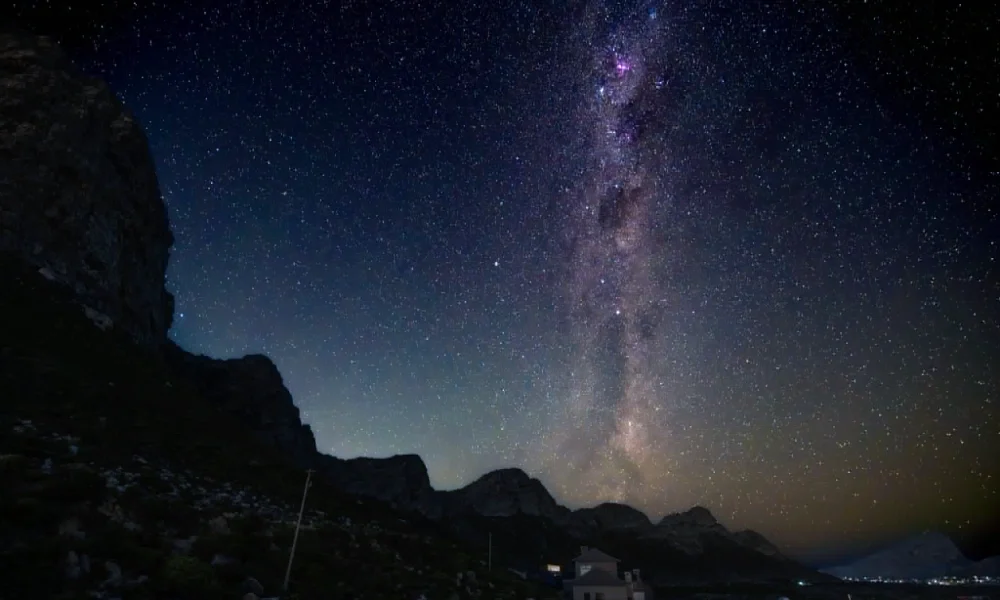
As our village grows, a quieter, less visible invasion is creeping in – light pollution. This is more than just a loss of a beautiful view. It is an ecological and psychological hazard.
Ecological and Psychological Impacts
Human Wellbeing
Artificial night lighting impairs the natural atmosphere and tranquility of the night, giving rise to human irritation, disturbed sleep patterns and stress in a manner very similar to noise pollution.
Disruption of Wildlife
Excessive artificial light creates conditions that disrupt the natural day/night genetic adaptations of local species.
-
Marine Life Bright coastal lighting can confuse nocturnal shorebirds and disrupt the natural behaviours of marine life close to the shoreline.
- Fynbos Ecosystems Many local insect pollinators and small mammals are entirely nocturnal. Harsh artificial light disrupts their feeding, mating, and navigation patterns.
- Birds Light pollution obscures the moon and starlight that nocturnal migratory birds use for orientation, causing them to migrate at incorrect times or collide with buildings and transmission lines. It has also been documented to alter singing behaviours abnormally past midnight.
- Frogs Glare affects wetlands, disrupts breeding calls, and delays the metamorphosis of tadpoles.
- Other Animals & Insects Night lights alter natural predation conditions, creating imbalances that increase the risk of small nocturnal mammals being killed. It also acts as a deadly trap or attractor for insects, which subsequently impacts the entire food chain and pollination cycles.
Keeping the night dark
Let’s work together to restore the night skies and protect our local wildlife. Here are some practical suggestions for homeowners.
Indoor lights
- Keep light inside Turn off unnecessary lights and ensure curtains or blinds are drawn completely closed at night.
- Shift to warm, low-lumen bulbs Choose bulbs rated at 3000K or lower (warm white, amber, or yellow). For modern LED bulbs, a 5 to 6-watt bulb is usually more than enough for outdoor spaces.
- Mind Your Skylights If your home features skylights or high clerestory windows, avoid placing bright, upward-pointing spotlights underneath them inside the house.
Outdoor lights
-
Smart Outdoor Fixtures Use fully shielded lampshades that direct light downward rather than outward or upward. Footlights are strongly preferred over elevated lighting.
-
Automation Restrict outdoor lighting with motion sensors and timers so they only activate when legitimately needed rather than burning continuously.
-
Security Lighting Leaving lights burning continuously rarely deters criminals. Instead, it often advertises that the occupants are either scared or away from home or indicates that the house contains valuable items. Let’s get rid of the ‘blue’ alarm lights!
-
Atmospheric Scattering Approximately 40% of unshielded night lighting is scattered uselessly into the atmosphere outside its target area, functioning as a major menace to both professional and amateur astronomers.
Keep it low, keep it warm, point it down, shield the night.