On fences and walls in the village
BY RALPH PINA
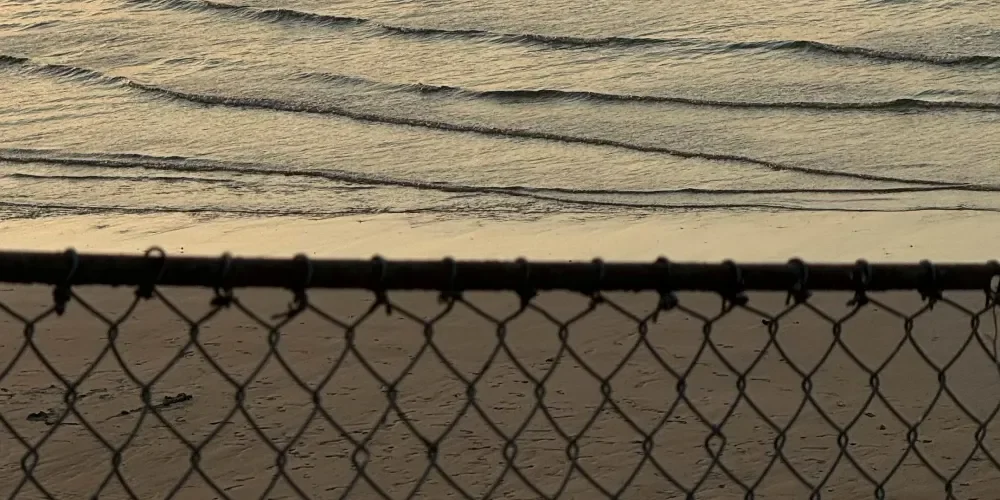
Following the ongoing controversy around the mesh fencing-in of Die Punt (Erf 115), which among other sins, blocks access to the coastal path for many older and less agile Rooielsers, we thought it would be opportune to publish this short article which first appeared in the Compass #3 of 2025.
It also bears pointing out that the owner of Die Punt is not unique in fencing off his property. Even CapeNature, the local conservation custodian, was heavily criticised for erecting barbed-wire fences across the Brodie Link reserve, across the top of Betty’s Bay and on one side of the Rooiels estuary.
To Fence Or Not To Fence
Originally published in the Conservancy’s Compass Newsletter #3 2025
We have all heard the popular saying: “Good fences make good neighbours”. While that may be so in city or suburban urban settings where privacy and security are greater concerns, it is questionable whether the aphorism applies in a village like Rooiels – which may be described as “rural-urban fringe” and is a transition zone in the Kogelberg Biosphere. Here, thankfully, many owners and residents have resisted the urge to enclose their properties with an impermeable fence or wall.
Although we think that everyone would agree that enclosing a small portion of your property to keep pets in is fine, why do we argue that we should avoid fences (and walls) around the margins of our properties?
A Biosphere Transition Zone serves as a link between the village and the surrounding natural environment. As such it should be permeable to wildlife and not unduly disrupt ecological processes. Ecological processes would include:
-
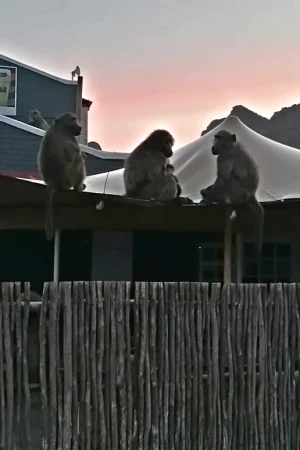
Seed dispersal processes and the retention of seed banks. Wind propagation and dispersal by animals, such as baboons, can be disrupted.
-
Connections and movements between communities of wildlife species, and their habitats. Fences can create ecological islands, possibly even trapping small reptiles like tortoises or ground nesting birds, affecting their reproduction and genetic diversity.
- Fences also block escape routes for wildlife threatened by fire, predators or dogs. And they can be lethal for birds and bats, depending on the type of fence.
Fenced properties also detract from the natural ambiance of Rooiels, which can easily shift from houses embedded in a green expanse to a collection of compounds, dicing up and fragmenting the ecology i.e. just another suburb.
Electrified boundary fences are also not recommended. They have proven to be ineffective in keeping the baboons out but result in injuries to wildlife. There are specialists that can assist with upper floor electric fencing – but the baboons are clever, so you need an expert with local knowledge to advise.
Fences are the most widespread human-made infrastructures on Earth, covering more distance than roads, but their ecological impacts are less studied. Their proliferation and rapid construction have led to a new field of research – fence ecology. The Conservation Corridor website points to the latest fence ecology resources, should you want to learn more.