Erica Thomae: A Fynbos Story That Sticks
BY DINE VAN ZYL
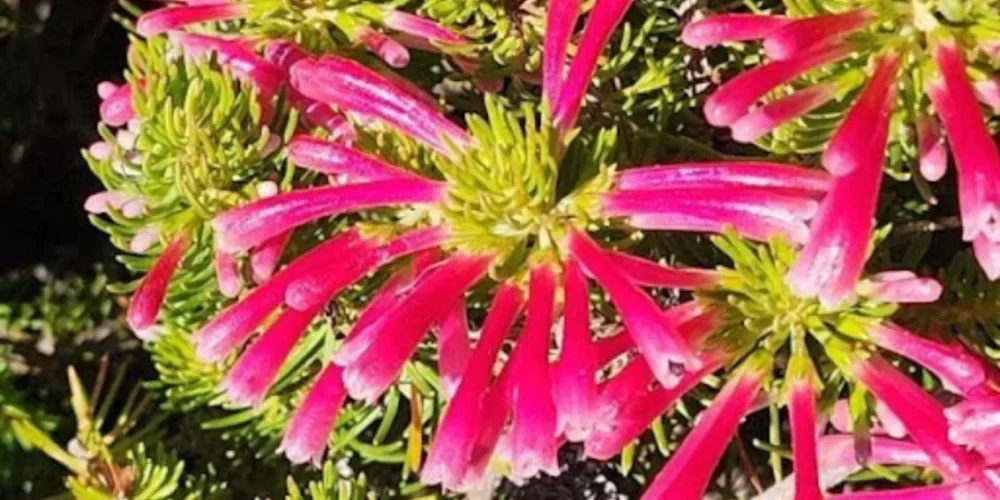
There is so much demanding your attention when walking in the mountains – take in the view, admire the rock formations, watch where you step. And then one day, on a path you have walked for years, you notice something new. A magnificant erica in full flower, almost shouting for attention. It is Erica thomae, the Flypaper Heath – easy to miss when not in flower, but impossible to forget once found.
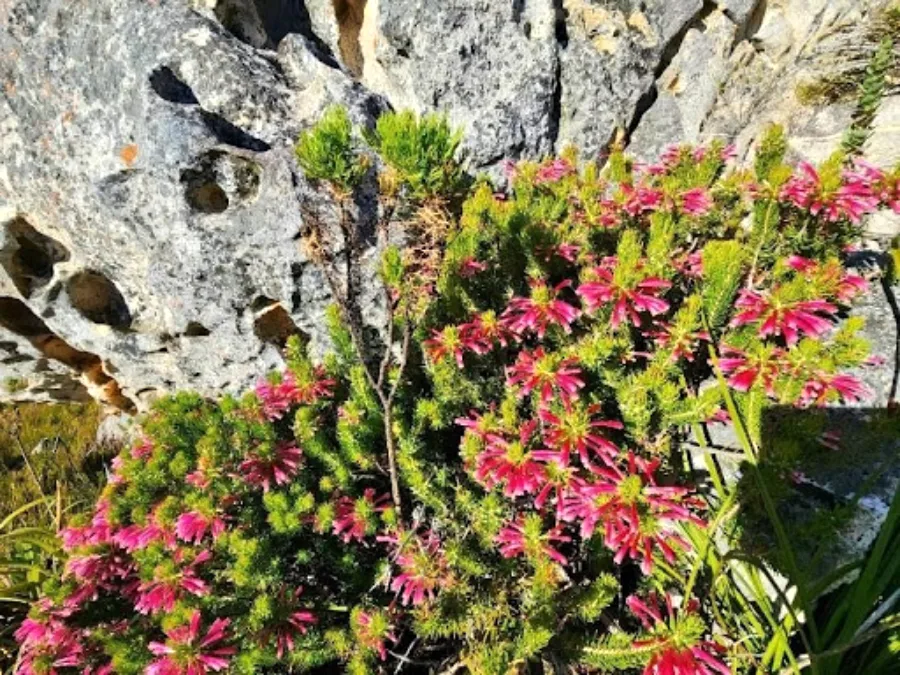
Erica thomae comprises three subspecies, and we are fortunate to have two of them right here in our patch of Kogelberg Sandstone Fynbos: Erica thomae subsp. porteri and Erica thomae subsp. thomae. The third, subsp. tenax, has been recorded near Kleinmond.
Affectionately known as the Flypaper Heath, it earns its name from its unmistakably sticky flowers – a small but fascinating adaptation in the intricate web of fynbos biodiversity.
A Summer showstopper
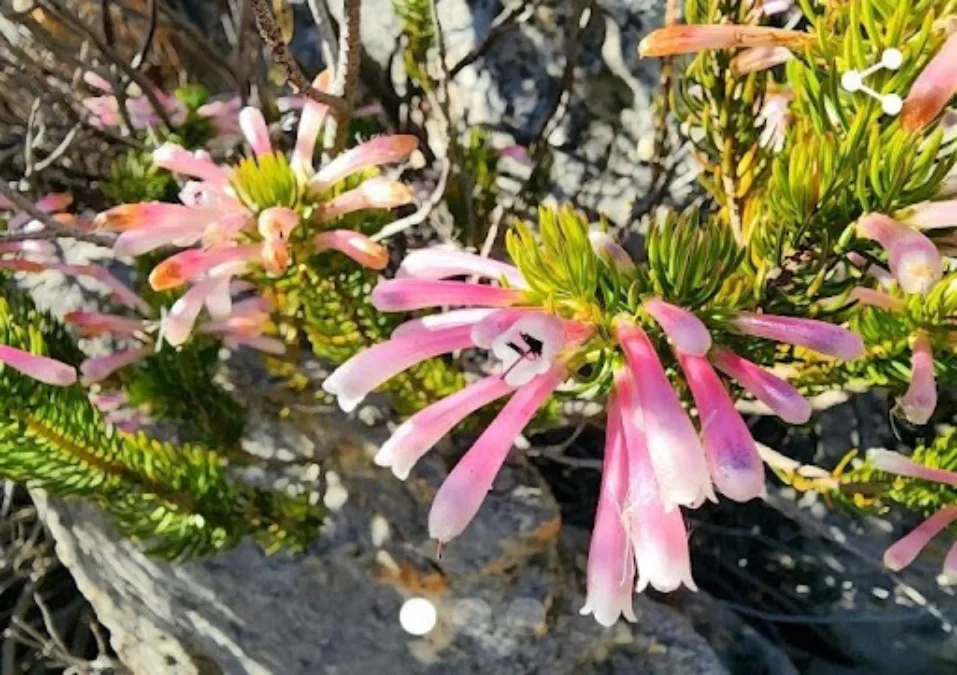
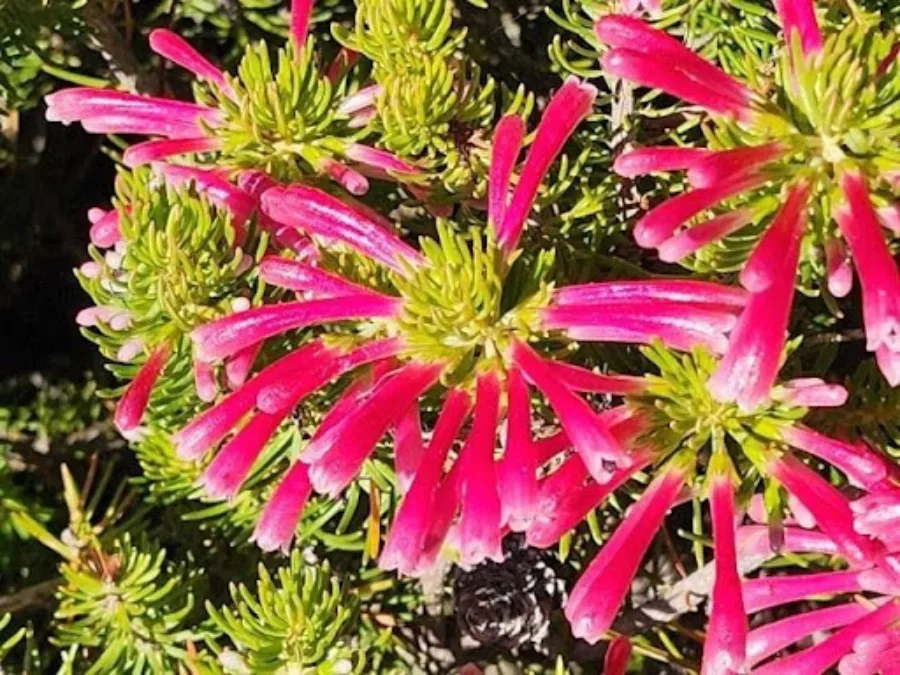
Erica thomae subsp. porteri is a stunner. The tubular flowers range from soft pink to deep beetroot-red, all tipped in white. They look spectacular against the grey rocks.
Where It Grows
Erica thomae subsp. porteri establishes itself among rocks and boulders in Kogelberg Sandstone Fynbos. It was originally known from a single population in the Buffelsrivier Valley near Pringle Bay.
Since then, further populations have been recorded in the mountains around Rooiels, Pringle Bay and a few in Betty’s Bay. There used to be a population along the dirt road between Rooiels and Pringle Bay, but it was lost during the installation of a water pipeline. Encouragingly, new plants have since emerged in the surrounding fynbos.
Pollinators At Work
Orange-breasted and Southern double-collared sunbirds are frequently visitors, flitting among the flowers as they feed on the nectar. The size and shape of the blooms match the curve of their beaks, making them effective pollinators. The sticky flowers do not deter the birds, but smaller insects may become trapped, preventing them from accessing the nectar and pollen. The tiny seeds are easily dispersed by wind.
Fire And Survival
Like most fynbos plants, Erica thomae is adapted to a fire-driven landscape, Its preference for rocky crevices may offer some protection from both fire and herbivores. The mountains above the Rooiels River burnt in the 2019 fire. Afterwards, a few mature plants were found growing safely among rocks – survivors of the blaze. In 2026, they are still there.
In Search Of A Rare Erica
Erica thomae subsp. porteri is listed as Rare, due to its limited habitat. At first, sightings were simply moments of awe and appreciation – they are truly beautiful when in flower. But curiosity grew, and with it, a more focused search (often with the Walkie-Talkie hiking group).
- May 2022: A few plants observed
- May 2023: About five plants counted at the same location
- February 2024: Healthy new plants found further along the same route in the mountain
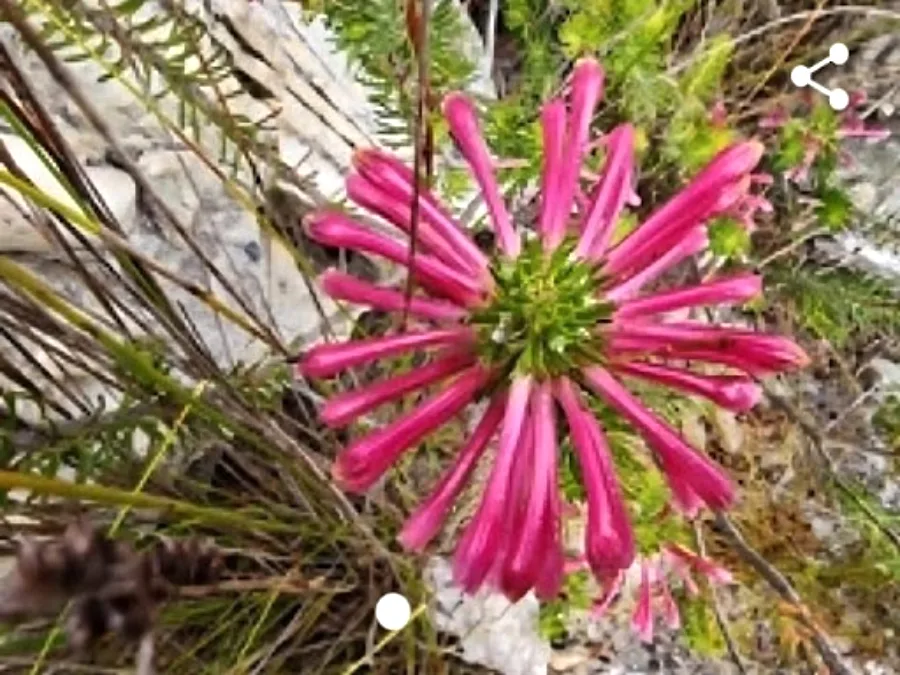
- January 2025: A breakthrough – we were keen to find more Erica thomae subsp. porteri and counted 24 flowering individuals, varying from pale pink to deep beetroot-red.
The 2026 Survey of Erica Thomae subsp. porteri
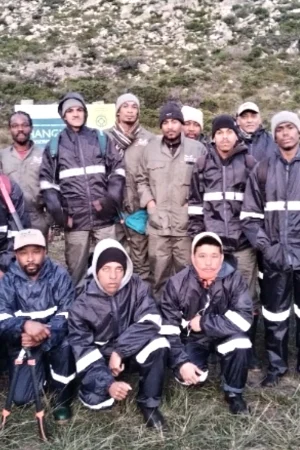
On 6 March 2026, we set out with a single goal: to locate and count Erica thomae subsp. porteri in the Rooiels mountains. We were thrilled to count 83 individuals – with many more likely beyond the immediate survey area. We shall check this in 2027.
Conservation Status
Although Erica thomae subsp. porteri is listed as Rare, it is currently assessed as Least Concern. Its habitat within the Kogelberg Reserve appears well protected, with no invasive alien vegetation or evidence of flower harvesting observed. The information was shared with CapeNature and other interested parties.
A Bonus Discovery
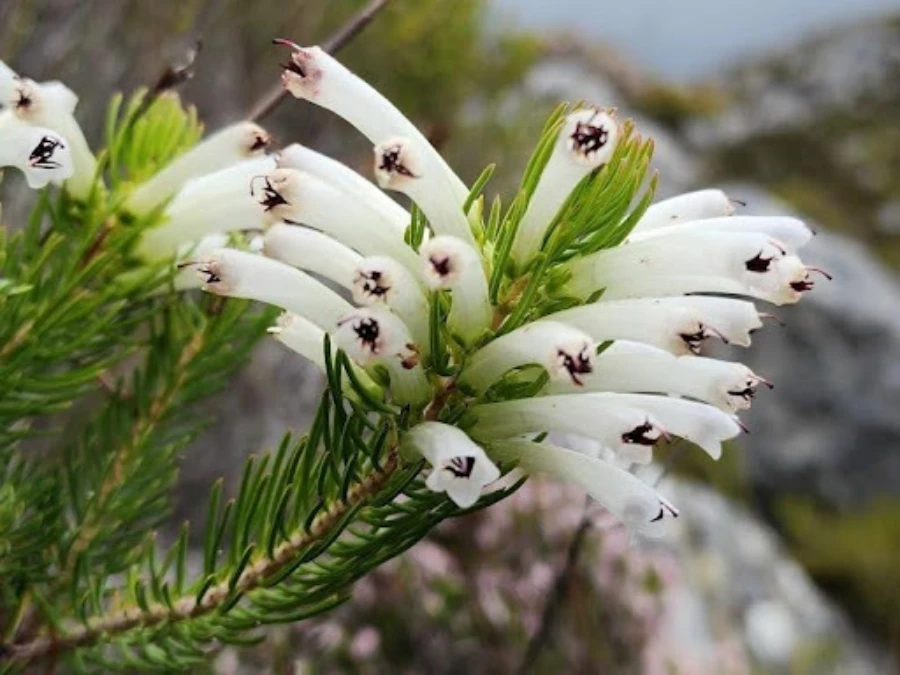
We also encountered the second subspecies – subsp. thomae, equally beautiful, with sticky white tubular flowers standing out against the rocky slopes.
Final Thought
Some plants shout for attention. Others wait quietly among the rocks, hidden in plain sight. Perhaps this Erica was always there – part of the fynbos story, simply waiting to be noticed.
You can read more about Rooiels fauna and flora on the Rooiels Fynbos website, authored by Dine van Zyl and Graham McCleland.